
Sustainability in Product Design

In short
Sustainability in product design means considering environmental impact at every stage — from material selection and manufacturing process through to end-of-life disposal. It's not a trend or a marketing angle. It's a design constraint that belongs alongside cost, performance, and manufacturability from day one.
How'd This Happen?
Mass consumerism took off after WWII, with advancements to assembly lines and increased product availability that resulted in everyday people being able to buy all the things. Where previously you had to have a decent nest egg to afford many non-essentials on the market, mass production meant cheaper goods, which meant goods for the common man. (How designers got involved in all of this is its own story; our history of industrial design covers it.) But as scientists and environmental groups quickly realized, this wasn't so good for the Earth.
Think of all the disposable products we use on a daily or weekly basis. Even if you're environmentally conscious (and that's awesome, we love you for it), chances are you still toss things on the reg. Over the past month, have you used Q-tips, single-use coffee pods, a takeout container, facial tissues, or anything that had more than the minimal required packaging around it? Don't feel bad — we all do it. And ANCORD isn't here to police your habits. We're here to help along the manufacture of goods that aren't disposable, so that next time, you have options!
The Modern Manufacturing Mess
Even beyond the products themselves, an awful lot of waste is intrinsic in the manufacturing process. Take the clothing industry, for example. A 2020 report by McKinsey and the Global Fashion Agenda found that the fashion industry produced about 4% of global greenhouse gas emissions in 2018. While that's not the second most-polluting industry, as many like to claim, it's still kind of lousy. A number of brands have even admitted to burning their overstock to keep their threads exclusive.
Furniture production industries produce waste in various ways, too, including overproduction of cut pieces and whole products and using overly large machines for drying small amounts of painted pieces.
Things Are Getting Better
All that's a bit of a downer, but it's also not news that many companies, and even industries as a whole, are working to reduce their footprint and the waste they produce. One way of doing this is by changing up their materials: switching from plastics to glass for bottled drinks, for example, or choosing more sustainable steel, which can be recycled over and over, rather than those with toxic components like mercury.
Companies have also started thinking about their manufacturing processes. Some fashion corporations are making an effort to use all or most of their fabric scraps rather than tossing them, or offering to repair and resell customers' old merchandise.
Shoe companies are stepping up, from Adidas' new line made with recycled ocean plastic to Nothing New's foray into footwear built from 100% recycled material. Governments are pushing for sustainable manufacturing across all industries, arguing that adopting these methods increases operational efficiency and builds “long-term viability and success.”
Starting Strong to Finish Strong
Some organizations have been preaching improved sustainability in manufacturing for decades, but it's only in the last 20 years or so that the concepts have really been driven to the fore of global conversations.
In 2002, an architect named William McDonough and a chemist named Michael Braungart wrote Cradle to Cradle: Remaking the Way We Make Things. The book has been dubbed “one of the most important environmental manifestos of our time.” The authors argue for an updated design schematic based on three principles:
- all products can be made into other products,
- manufacturing should use clean and renewable energy, and
- we must recognize the importance of diversity in manufacturing.
The writers show how design and creation of products can improve our world, rather than simply add to the trash.
It's clear these concepts are embraced by more than a few academics, too. Even more than a decade ago in our industrial design studies, entire courses were dedicated to incorporating sustainability into our future careers. We were encouraged to acknowledge our inherent responsibility: to help bring about the systemic changes essential to keeping our world liveable.
As designers, we should also be a voice of reason when it comes to deciding what needs to be replaced or improved — gone are the days where we mindlessly make new stuff to replace old stuff without any effort to increase the useability or longevity of the product.
Our commitment to you and the Earth
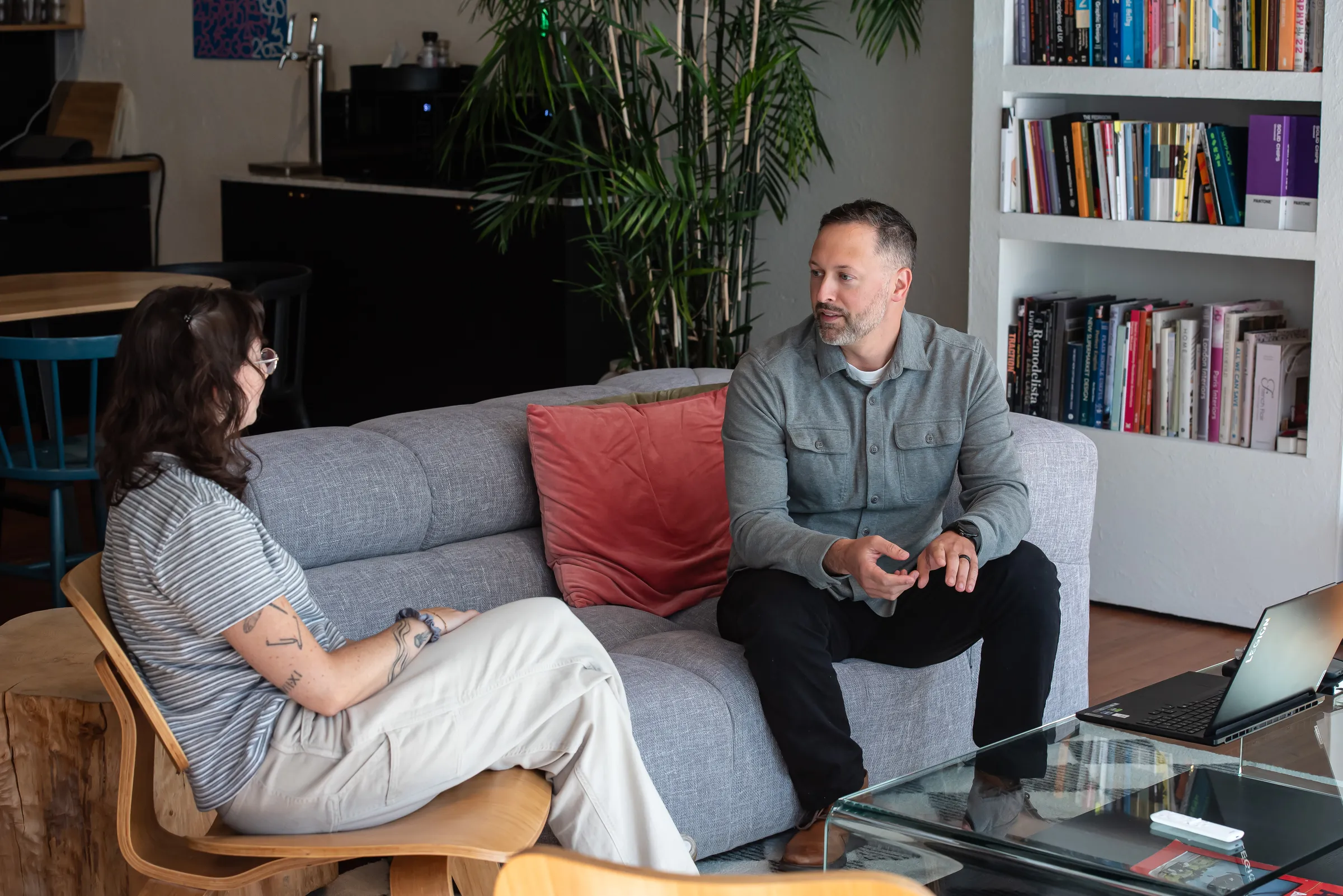
All that is why sustainability is woven into every layer of ANCORD. When we work with our clients, we're always focused on how we can best support other local businesses, and we limit paper use by keeping our presentations digital whenever possible. We stay up to date on the hottest materials, production processes, and manufacturers that'll ensure your project is as eco-friendly as can be.
We take our peripheral energy consumption and footprint into consideration, too. We keep the amount of plastic, single-use products we purchase to the barest minimum, both personally and professionally.
Want to see this in action? Read about how we designed the Nada toothbrush — a case study in sustainable product design done right. Or explore our three guiding principles that drive every project we take on.
FAQ
Short answers to common questions—if you’re wondering, you’re not alone.
Considering a product’s environmental impact at every stage: the materials, how it’s made, how long it lasts, whether it can be repaired, and what happens to it at the end of its life. It’s a design constraint alongside cost and performance, not a marketing angle.
Not necessarily. Choosing a material that’s easier to recycle, designing a part to come apart, or making a product last longer are decisions made in CAD, before tooling, and they often cost nothing extra at that stage. What costs money is changing course after the moulds are cut.
Durability. A product that lasts twice as long halves everything else: material, manufacturing energy, shipping and waste. Repairability and recyclable materials come next.
Every project is weighed against three principles: a positive impact on the environment, a connection to nature, and a benefit to the community. Read about them in our three guiding principles.
We believe sustainability should be front of mind, all the time. Have an amazing idea and think we'd be a great fit?
More posts
Have a product in mind? We'd like to hear about it. A short note is plenty, and we'll suggest a time to talk.